CurveBend is a seven-year research programme on whether people who share a landscape can work together in ways that bring biodiversity back, while keeping farming and rural livelihoods viable.
I take part as a PhD candidate in the Dutch work package, studying the governance of nature restoration in Dutch peat meadow landscapes.
- Full title
- From biodiversity loss to a nature-positive society through mobilisation of collective action at the landscape scale
- Funding
- Dutch Research Council (NWO), Dutch Research Agenda (NWA‑ORC)
- Duration
- 2025–2032
- Regions
- The Netherlands, Argentina, Kenya and Tanzania
- My role
- PhD candidate, Work Package 1, at the Open Universiteit and Radboud University
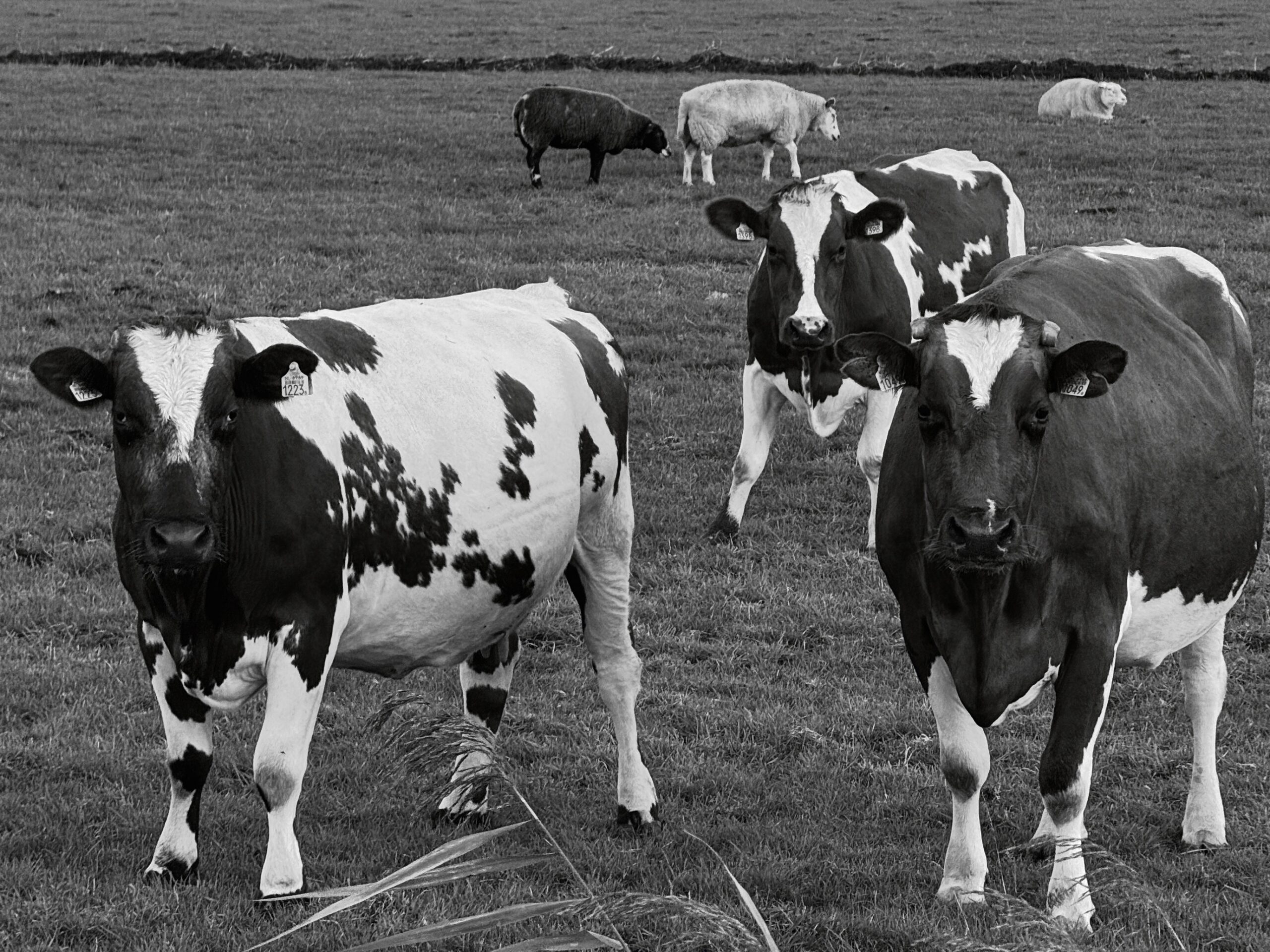
Why CurveBend?
Biodiversity keeps declining, in the Netherlands and worldwide, despite decades of targets, laws and subsidy schemes. None of the twenty global biodiversity targets agreed for 2020 was fully met.
Part of the explanation is a matter of scale. Goals are set in international agreements and by national governments, while measures mostly land on a single farm or field. Yet much of what plants and animals need plays out in between: across neighbouring parcels, ditches, water levels and nature reserves. That middle level, the landscape, is where no one is fully in charge.
CurveBend asks whether collective action can fill that gap: farmers, conservationists, governments, companies and residents organising together at the scale of a whole landscape.
- Biodiversity loss so far
- Business as usual
- Separate efforts on single farms
- Efforts tied together at the landscape scale: bending the curve
Lifescapes
To make that idea concrete, CurveBend speaks of lifescapes. A meadow bird such as the black-tailed godwit needs more than one good field. It needs places to feed and to nest, and safe, insect-rich grassland where its chicks can grow up. If one piece is missing, the population declines, even when the rest of the landscape looks fine.
People need a landscape that fits their lives as well: land to farm, places to live and work, room to unwind. When land use no longer fits the needs of species, or of the people who live there, the programme speaks of a lifescape mismatch. The question is whether collective action can bring the two together into socio-ecological lifescapes: landscapes that work for nature and for people.
- What species need: the ecological lifescape
- What people need: the human lifescape
- Where both fit: a socio-ecological lifescape
CurveBend in brief
CurveBend brings together ecologists, anthropologists and governance researchers from the Netherlands, Argentina, Kenya and Tanzania. They work with farmers, conservation organisations, governments and companies in three regions where livestock shapes the land.
The Netherlands
Intensive dairy landscapes, where agricultural collectives coordinate nature management on farmland. This is where my research takes place.
Argentina
The grasslands of the pampas, shaped by generations of cattle ranching.
Kenya and Tanzania
Rangelands where pastoralists, their livestock and wildlife share the same land.
Two further work packages connect the regions. One compares and synthesises the findings, the other organises co-creation, communication and impact.
Two phases
The programme runs from May 2025 to April 2032.
Follow the Project
From the field: the CurveBend Quarterly
Four times a year, the CurveBend consortium shares behind-the-scenes updates from its study areas in the Netherlands, Argentina, Kenya and Tanzania. The newsletter is published in English, Dutch, Spanish and Kiswahili; I write and translate the Dutch edition.
My project
A critical traversal of the socio-ecological entanglements for biodiversity governance in Dutch lifescapes
Since 2016, agri-environmental schemes on Dutch farmland have run through regional agricultural collectives. They receive public funding, coordinate measures among their members and report back to the government. On paper, this is collective action. In practice, collectives sit between what policy asks of them and what the land allows.
My research follows that tension. I look at how agricultural collectives, farmers and governments shape the room for collective action, and why well-intended nature policy so often stalls on its way from the policy document to the field.
How do the interplays between Dutch agri-environmental governance and socio-ecological lifescapes shape the potential for collective action for transformative biodiversity governance?
The Grid and the Meshwork
To study that tension, I work with two images of the same landscape.
The Grid
How governance sees a landscape: parcels, measures, hectares and indicators. Simplifying is necessary to make a landscape manageable, but it also turns collective action into a fixed block that is expected to deliver results.
The Meshwork
How a landscape is lived: farmers, meadow birds, foxes, water levels, machines and plans that keep running into each other. Here collective action is never finished. It is a knot that has to be tied again every season.
Biodiversity governance happens where the two meet, and that meeting is rarely smooth.
Four frictions
I follow the meeting of grid and meshwork through four frictions.
Blocks and knots
Subsidy schemes treat a collective as a block: a fixed organisation that delivers hectares and measures. On the ground it behaves more like a knot of people, animals and plans that has to be retied again and again.
Distributed agency and sovereignty
Peat subsides, foxes take chicks, salt water creeps in. The landscape acts on its own, while governance expects things to be controllable and someone to be accountable.
The metric and the mud
Formal monitoring asks for countable, auditable data. Farmers, ecologists and volunteers carry knowledge that is hard to count: where the lapwings nested this year, or when a field is ready to be mown.
The fantasy of control
Policy often leans on the promise that nature restoration and intensive farming can always go together. That promise keeps current arrangements in place, even when the ecological results stay behind.
The aim is not only to criticise. I want to find out what gives forms of collective action for biodiversity more room to act: governance that fits better with how landscapes actually work, and practical strategies that collectives and policymakers can use.
Theoretical background, for academics
CurveBend starts from the commons. Elinor Ostrom showed that groups can govern shared resources well through rules they make and enforce themselves. The programme extends that idea to the landscape scale, as a ‘commons 2.0’ that connects farmers, conservationists, governments, businesses and citizens around both ecological and human lifescapes.
In my own project I add a processual-relational view. Ostromian approaches often treat actors, resources and governance systems as separate variables, and collectives as organisational containers. Following Tim Ingold, I read a landscape instead as a meshwork of lines of becoming, in which farmers, meadow birds, policy plans and water levels continuously affect one another. With Karen Barad’s notion of intra-action, ‘the farmer’ and ‘biodiversity’ do not exist before they meet, but take shape through their relations.
From this perspective, collective action is an ongoing and precarious accomplishment rather than a stable organisation, and the work of restoration happens in how these lines are knotted together. James C. Scott’s analysis of how states make landscapes legible, and of the practical knowledge he calls mētis, informs how I read the grid.
- Barad, K. (2007). Meeting the universe halfway: Quantum physics and the entanglement of matter and meaning. Duke University Press.
- Ingold, T. (2011). Being alive: Essays on movement, knowledge and description. Routledge.
- Ostrom, E. (1990). Governing the commons: The evolution of institutions for collective action. Cambridge University Press.
- Scott, J. C. (1998). Seeing like a state: How certain schemes to improve the human condition have failed. Yale University Press.
Where and how
I work in depth in two landscapes where dairy farming, meadow birds and water management meet, and visit other collectives and organisations across the country for comparison. In these deep-dive areas I work closely with CurveBend’s ecologists and anthropologists, so that we look at the same landscape from different angles. Click an area below, or a pin on the map, to zoom in. Zoom out with the minus button to see the rest of the country.
A landscape on the western edge of the Amsterdam region, where dairy farming, nature management and recreation share the same land.
An open polder landscape north of Amersfoort, where farmers, Agrarisch Collectief Eemland and nature organisations work on meadow-bird management.
How I work
- Conversations
- Interviews with farmers, coordinators of collectives, ecologists, volunteers and policymakers, guided by themes rather than a fixed list of questions.
- Walking the land
- Walking interviews and participant observation: joining field days, meetings and monitoring rounds to see how decisions are made on the ground.
- Group sessions
- Facilitated meetings in which participants explore problems and possibilities together.
- Visual and art-based methods
- Photography, drawing and mapping to capture what is hard to put into words.
- Policy analysis
- Following how rules and schemes change over time, and what happens to them on their way to the farm.
- Discourse analysis
- Looking at the stories that circulate about nature and farming, such as the promise of win-win, and at what those stories do.
Meedoen of meedenken?
Ben je boer, coördinator of bestuurder van een agrarisch collectief, terreinbeheerder, vrijwilliger of beleidsmaker? Dan hoor ik graag hoe samenwerken voor natuur er bij jou in de praktijk uitziet, juist ook waar het schuurt.
Meedoen betekent meestal een gesprek van ongeveer een uur, aan de keukentafel of tijdens een wandeling over het land. Wat je vertelt, behandel ik vertrouwelijk en verwerk ik anoniem, tenzij je zelf anders wilt. Wat ik leer, deel ik graag met je terug.
Prefer English? You are just as welcome to write to me in English.
Talks and outputs so far
What I have presented and taught within CurveBend so far, newest first.
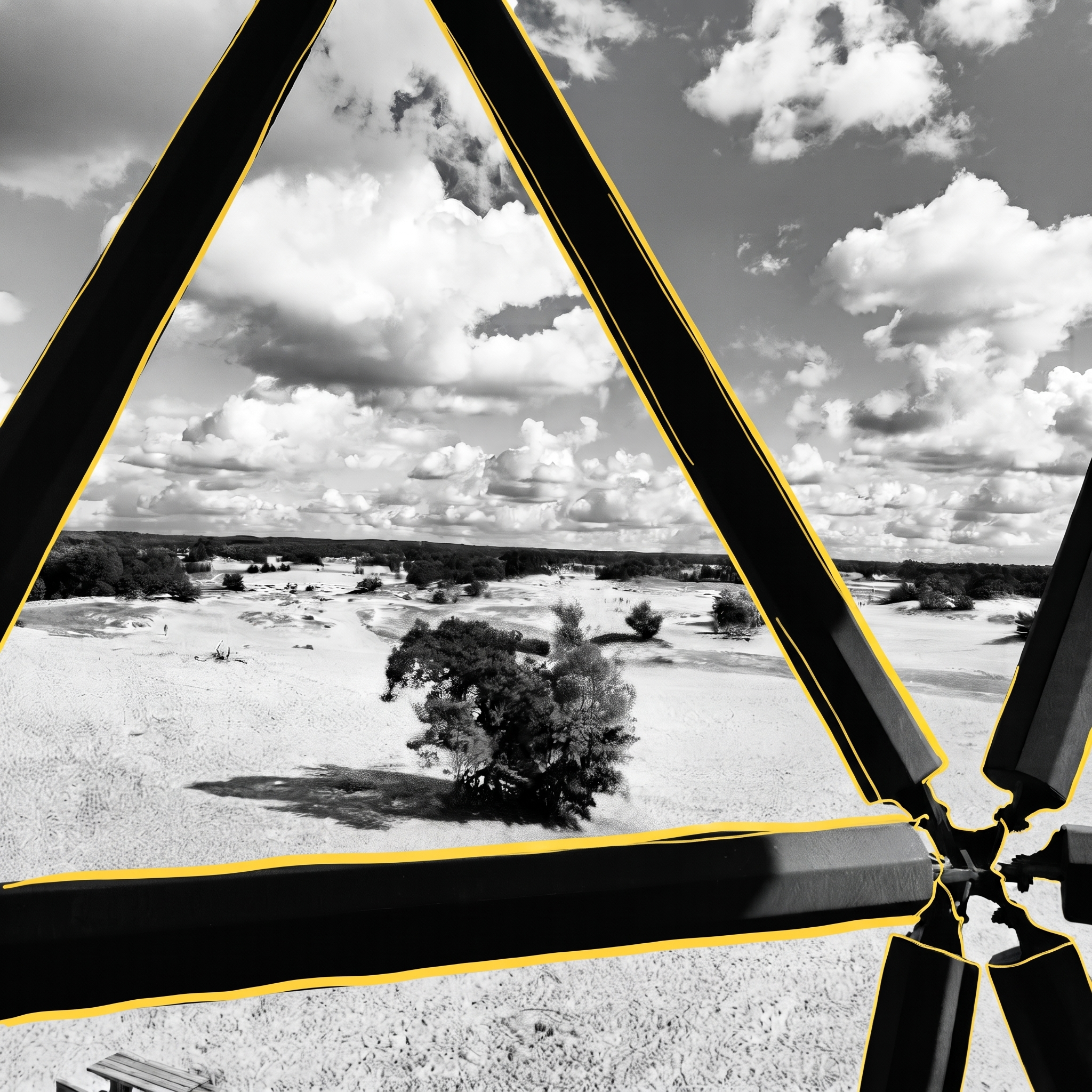 Exploring Science in Society × CurveBend (2026–27)Radboud University, Nijmegen
 Researcher spotlight on the CurveBend InstagramCurveBend consortium
 Experiences from inter- and transdisciplinary collaboration in Dutch biodiversity research (round table)European Congress for Conservation Biology, Leiden
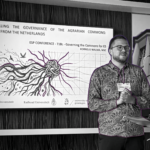 Unravelling the governance of the agrarian commons: lessons from the NetherlandsEcosystem Services Partnership Europe Conference, Prague
 A critical traversal of the socio-ecological entanglements for biodiversity governance in Dutch lifescapesISiS colloquium, Radboud University, Nijmegen
 Beleid: Waarom loopt natuurbeleid vast in de praktijk?Agrarisch Collectief Eemland, Bunschoten-Spakenburg
 First-year PhD proposal presentationOpen Universiteit, Utrecht
 CurveBend: introduction to the project, with Riyan van den BornISiS colloquium, Radboud University, Nijmegen
 Exploring Science in Society × CurveBendRadboud University, Nijmegen
People and partners
Supervision
- Raoul BeunenOpen Universiteit
- Riyan van den BornRadboud University
- Chris SmitUniversity of Groningen
Work Package 1
The Dutch work package is coordinated by Chris Smit and Riyan van den Born. I work alongside fellow researchers Lotte Mens (University of Groningen), Yannick Overzee (Leiden University) and Rosa Boone (Vrije Universiteit Amsterdam), and with senior researchers from Groningen, Leiden, Amsterdam, Wageningen, Heerlen and Nijmegen.
Societal partners
In the Netherlands, CurveBend works with, among others:
- Commonland
- Deltaplan Biodiversiteitsherstel
- FrieslandCampina
- IUCN NL
- Land van Ons
- SoortenNL
- Staatsbosbeheer
- De Vlinderstichting
- Vogelbescherming Nederland
- Wij.land
CurveBend is funded by the Dutch Research Council (NWO) through the Dutch Research Agenda (NWA‑ORC). The views on this page are my own.
curvebend.org (opens in a new tab) | CurveBend on Instagram (opens in a new tab) | CurveBend Quarterly (opens in a new tab)
Last updated: November 2026